Lucilius Press › Reading guides
Publilius Syrus' sentences in English
Publilius Syrus was a Syrian brought to Rome as a slave in the first century BC, freed for his wit, who became a star writer of mime, Rome's popular comedy. His plays are lost. What survives is a collection of one-line maxims taken from them, arranged alphabetically, several hundred lines long, about money, favors, friendship, danger and luck.
A few in modern English
The lines were written for an audience to remember, so they are short and pointed. "Put up with a friend's faults and you make them your own." "Arguing with a drunk is hitting someone who is not there."
English versions
Darius Lyman's nineteenth-century The Moral Sayings of Publius Syrus is public domain. J. Wight Duff and Arnold M. Duff's Loeb volume Minor Latin Poets (1934) includes the sentences with the Latin facing.
The Lucilius Press edition
The Book of Ancient Maxims: Pythagoras, Solon, Cato and Publilius Syrus is a modern plain-English translation that includes the sentences of Publilius Syrus, keeping the numbering of the text it translates, along with the Delphic maxims, the sayings of the Seven Sages, the Golden Verses and other collections. Here are lines from the start of the letter A.
Whatever comes by wishing is never truly yours.
Expect from others what you have done to others.
The mind that knows how to fear knows how to walk safely.
Agreement makes humble forces strong.
Love is taken up by choice, never laid down by it.
Suspicion runs hardest toward the worst.
Love your parent if he is fair; if not, bear him.
Keep your eye on anything you can lose.
Put up with a friend’s faults and you make them your own.
For a freeborn person, debt is bitter slavery.
Arguing with a drunk is hitting someone who is not there.
From The Book of Ancient Maxims: Pythagoras, Solon, Cato and Publilius Syrus, translated by Owen Halloway, Lucilius Press. Sentences of Publilius Syrus, from the letter A. Free sample, reproduced from the book.
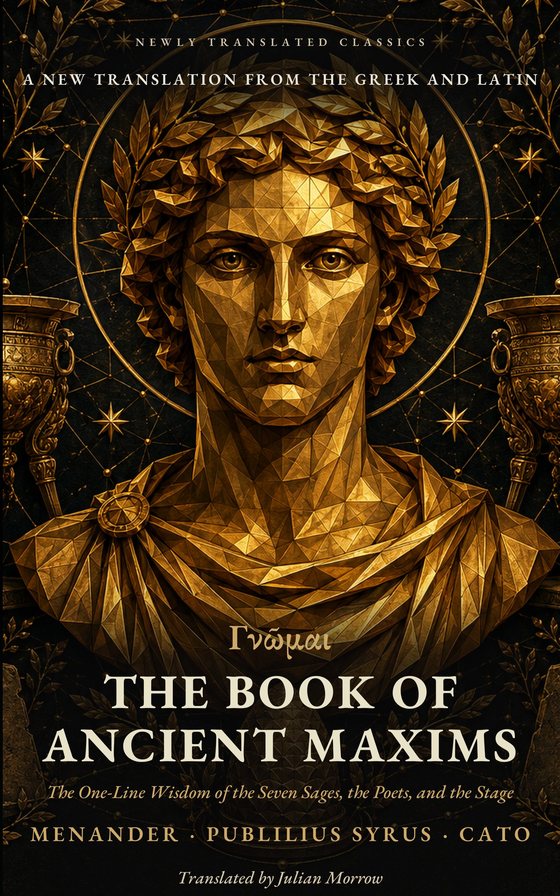
The Book of Ancient Maxims: Pythagoras, Solon, Cato and Publilius Syrus
Translated by Owen Halloway