Lucilius Press › Reading guides
Musonius Rufus' lectures in English
Musonius Rufus never wrote a book. What we have are about twenty-one short lectures written down by a student, plus a few dozen sayings and fragments quoted by later authors. They are practical talks on training, hardship, exile, marriage, food, clothing and old age, and they are short enough to read one at a sitting.
Who he was
Musonius was a Roman Stoic of the first century AD. He was exiled more than once under the emperors, and he taught Epictetus, whose own lessons became the Discourses and the Handbook. He is often called the Roman Socrates.
English translations
Cora E. Lutz's edition, Musonius Rufus: "The Roman Socrates", published in Yale Classical Studies in 1947, prints the Greek with an English translation and was the standard version for decades. Cynthia King's Musonius Rufus: Lectures and Sayings, edited by William B. Irvine (2010), is a more recent translation for general readers.
The Lucilius Press edition
Musonius Rufus: The Roman Socrates is a modern plain-English translation of the discourses and the fragments, with an introduction on who Musonius was. Each discourse carries a plain heading that tells you what it is about, such as "Why Hardship Is Nothing to Be Afraid Of" or "What Marriage Is Really For". Here is the first one, in which he explains why a few good arguments beat a pile of them.
Once, when a discussion came up about the kind of proofs young people ought to hear from philosophers in order to grasp what they are learning, Musonius said that one should not look for many proofs on each point, but for ones that are effective and clear.
“The doctor we praise,” he said, “is not the one who prescribes a long list of remedies to his patients, but the one who does real good with the few he prescribes. In the same way, the philosopher worth praising is not the one who teaches his hearers by piling up proofs, but the one who brings them to the conclusion he intends with only a few. And the sharper the listener, the faster he will agree to the main point, as long as it is sound. But whoever demands proof at every turn, even where the matter is already plain, or wants something proved to him at length when it could be settled briefly, is thoroughly wrongheaded and slow to learn.
From Musonius Rufus: The Roman Socrates, translated by Owen Halloway, Lucilius Press. Discourse 1, opening. Free sample, reproduced from the book.
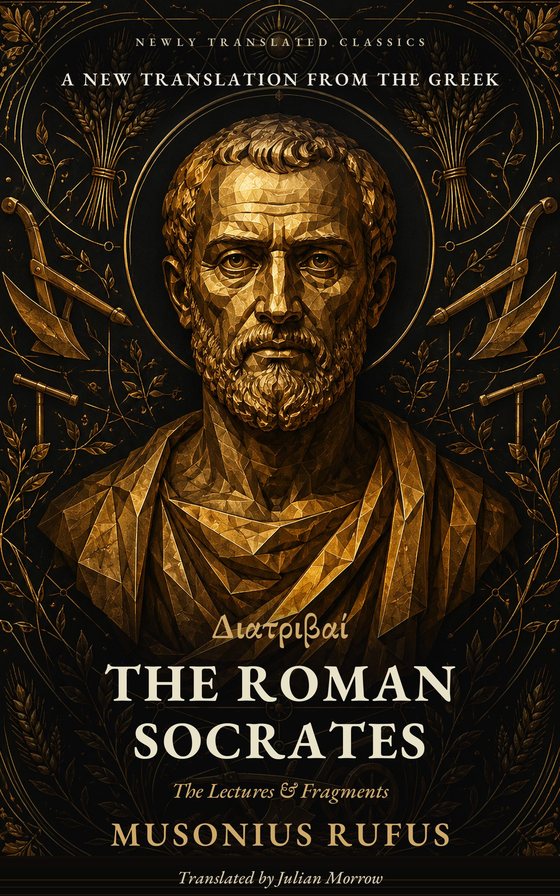
Musonius Rufus: The Roman Socrates
Translated by Owen Halloway